5k Pace and Race Time Predictor Examples
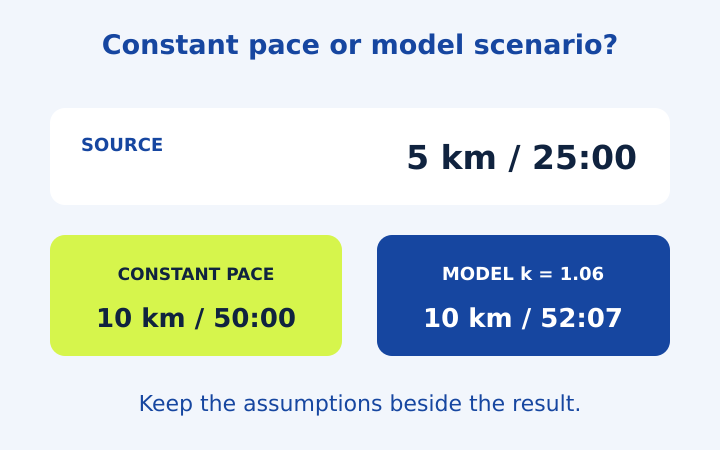
Follow five running arithmetic examples, including 5k pace, partial splits and an optional race-time model with its exponent clearly stated.
Read the noteUse the pace calculator to connect distance, time and pace. Read your numbers in kilometres or miles, build an even-split note and keep every assumption in view.

Free to use · No account · Browser calculations
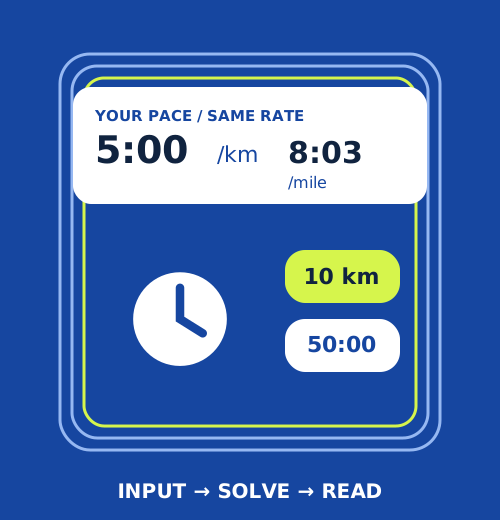
Start with the 10 km / 50 minute example, then choose which number you want to calculate.
Calculate pace from distance and time, finishing time from pace, or distance from duration and pace.
Read kilometre and mile pace together. Unit switches preserve the physical distance or rate.
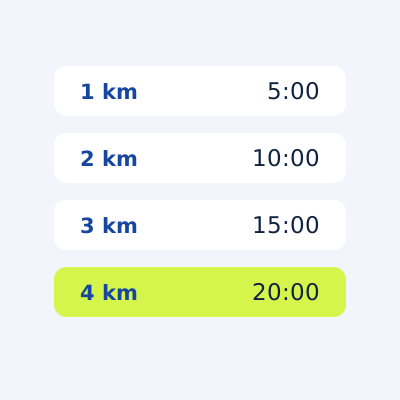
See individual and cumulative even splits, including the shorter segment at the finish.
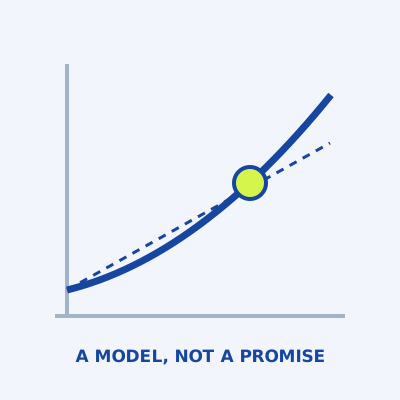
Optionally compare another distance with an editable power-law exponent, visibly separate from the main result.
Pick pace, time or distance. Use a distance and duration that describe the same interval.
Check kilometre or mile units, then review equivalent pace, speed and the even-split table.
Keep the time definition and assumptions beside your result. Optional predictions are model scenarios.
Calculate an average from your recorded distance and associated time. Label elapsed or moving time.
Turn a chosen time into an even-distance schedule. The tool does not decide whether the goal is suitable.
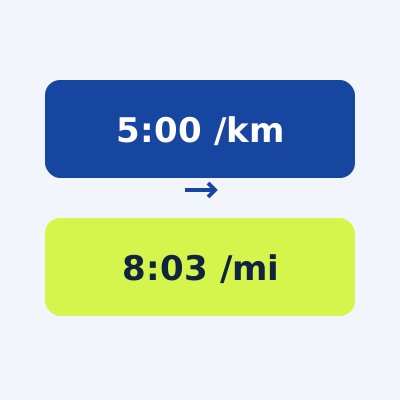
Convert mile and kilometre pace without treating minutes and seconds as decimal minutes.
Choose pace, time or distance as the unknown. Enter the other two quantities, then read equivalent kilometre and mile pace, speed and even-distance splits.
No. The table applies the calculated average evenly. A final partial segment is labeled, and long tables show an omission note after 100 complete segments.
No. The optional power-law model uses the stated distance ratio and exponent. It does not assess your preparation, health or race conditions.
No. Calculation fields stay in browser memory. The theme creates no calculation account, upload or persistent history. Copying uses your device clipboard.

Follow five running arithmetic examples, including 5k pace, partial splits and an optional race-time model with its exponent clearly stated.
Read the note
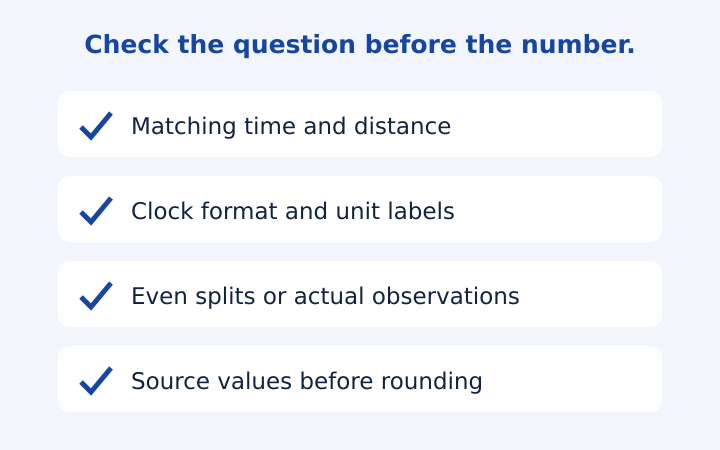
Catch moving-time mismatches, clock-format errors, unweighted averages and split-table assumptions before saving a running pace result.
Read the note
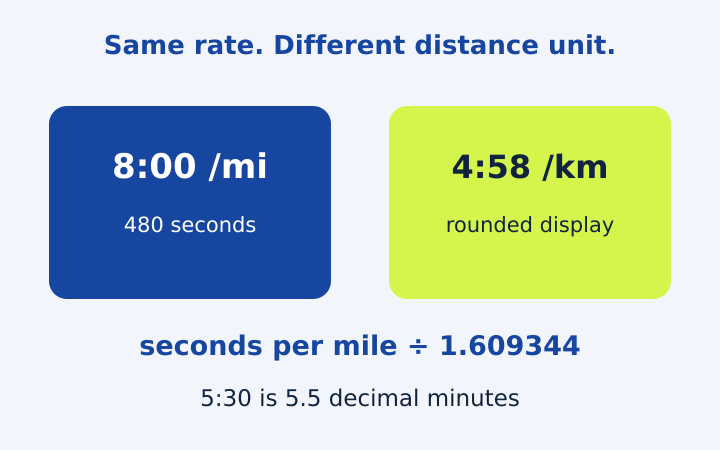
Convert mile and kilometre pace accurately, distinguish clock notation from decimal minutes, and compare pace with speed using worked examples.
Read the noteYour distance. Your time definition. The assumptions beside the result.